

Unlocking the Hidden Value in Your Backyard: Why Twin Cities Homeowners Are Turning to ADUs
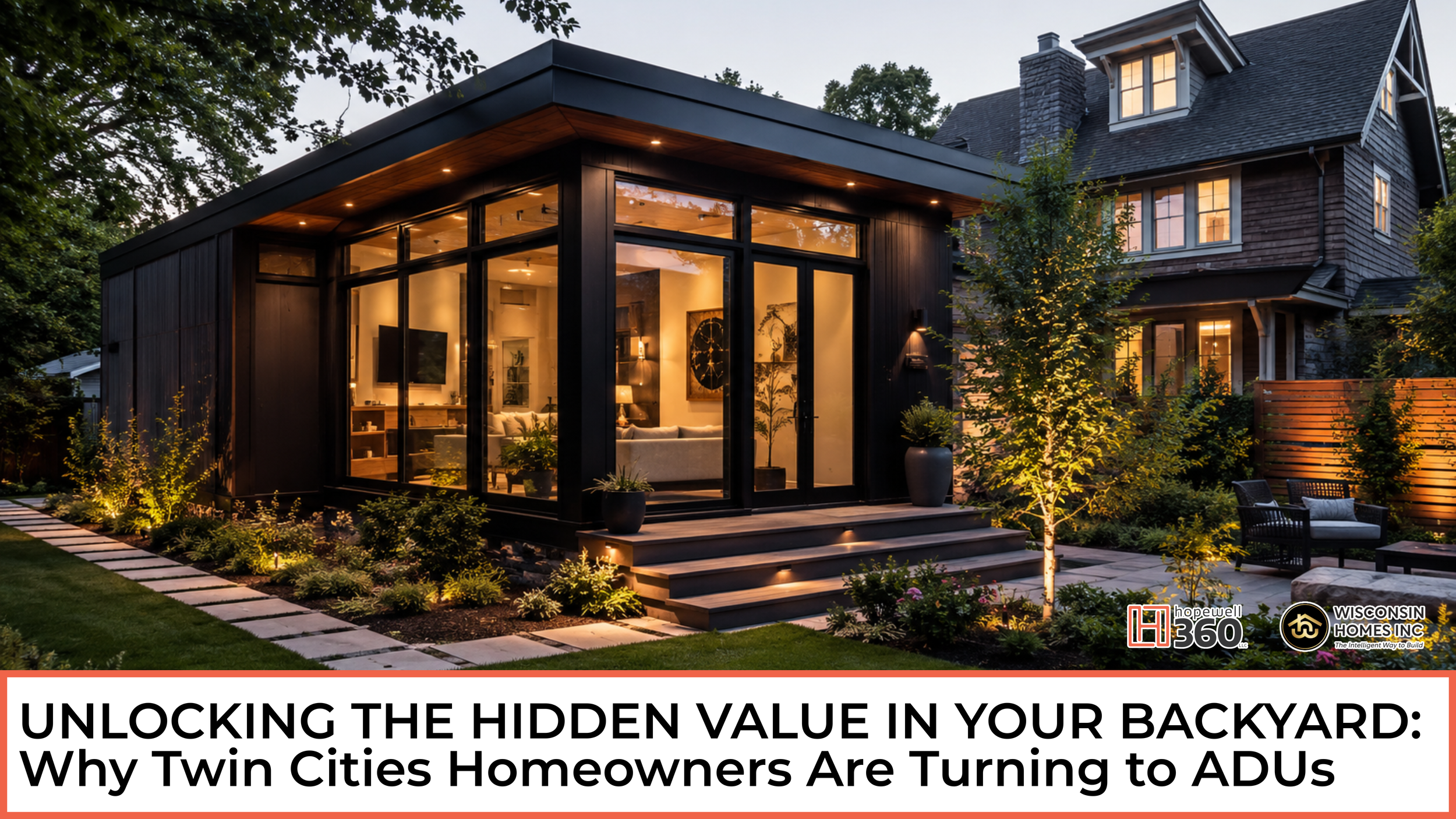
Across the Twin Cities, homeowners are discovering a powerful way to transform unused property into steady income, increased home value, and flexible living space. By adding an Accessory Dwelling Unit (ADU) to their properties, Minneapolis and St. Paul residents are capitalizing on recent zoning changes to build wealth without the need to purchase additional real estate [1].
Whether you call it a backyard cottage, a granny flat, or an in-law suite, an ADU is an independent, fully functioning living space built on the same lot as your primary residence. They can take the form of detached backyard units, garage conversions, basement suites, or attached additions [2]. As housing demands shift and local regulations become more accommodating, building an ADU has emerged as one of the smartest investments a homeowner can make.
The Financial Case: Steady Income and Increased Property Value
The primary driver behind the ADU boom in the Twin Cities is the significant financial upside. An ADU is not just extra square footage; it is an income-producing asset.
Rental Income Potential: In strong rental markets like the Whittier neighborhood in Minneapolis, modern ADUs can command rents of $1,800 or more per month [1]. This translates to over $21,600 in annual gross income generated from space that was previously sitting idle. With average apartment rents in Minneapolis hovering around $1,683 [3], a well-designed ADU offers a highly competitive and attractive option for renters seeking privacy and neighborhood living, while providing homeowners with a reliable cash flow to offset mortgage costs or fund retirement.
Property Value Appreciation: Beyond monthly rental income, adding an ADU significantly boosts the overall market value of your property. While costs vary based on size and finish, industry data indicates that a well-built, permitted ADU can increase a home's value by 10% to 35% [4]. In many cases, the equity gained exceeds the cost of construction. Homes with ADUs are highly sought after in the real estate market because they offer built-in income potential or ready-made multi-generational living spaces [2].
Flexible Living for Changing Family Needs
While the financial benefits are compelling, the lifestyle flexibility an ADU provides is equally valuable. ADUs offer a practical solution for families navigating different stages of life.
Multi-Generational Housing: ADUs are frequently referred to as "granny pods" because they provide an ideal setup for aging parents [2]. They allow older family members to live independently while remaining close to caregivers and family, offering privacy without the high costs of assisted living facilities.
Space for Adult Children or Guests: An ADU can serve as a transitional space for adult children returning home after college or saving for their own homes. Alternatively, it provides a comfortable, private retreat for extended family and out-of-town guests [5].
Dedicated Work or Creative Space: In the era of remote work, a detached ADU can function as a quiet, professional home office, a creative studio, or a space to run a home-based business, completely separate from the daily distractions of the main house [5].
Navigating the Twin Cities Regulatory Landscape
Historically, restrictive zoning laws made building small housing units difficult. However, both Minneapolis and St. Paul have recognized the need for diverse housing options and have modernized their regulations to encourage ADU development [6].
Minneapolis Regulations: The city allows attached, detached, and interior ADUs in all interior zoning districts where single-family and two-family homes are permitted. Detached units are generally limited to 1,000 square feet or 50% of the primary dwelling's floor area (whichever is less) and must not exceed 20 feet in height [6].
St. Paul Regulations: St. Paul has similarly embraced ADUs for single-family lots. Recent updates have streamlined the process, allowing unit sizes up to 800 square feet or 75% of the principal dwelling's area [7].
Surrounding suburbs, such as Edina, Golden Valley, and St. Louis Park, have also adopted ordinances permitting ADUs, though specific rules regarding owner-occupancy, short-term rentals, and setbacks vary by municipality [6]. Partnering with local experts who understand these specific zoning codes is crucial for a smooth permitting process.
A Faster, Smarter Way to Build
Traditional ADU construction can be a lengthy, disruptive process fraught with unpredictable costs and weather delays. This is where modern building solutions provide a distinct advantage.
Companies like Hopewell 360 offer a factory-built, modular approach to ADU construction [1]. By building the unit off-site in a controlled environment, homeowners benefit from shortened timelines, rigorous quality control, and price certainty. This streamlined process minimizes disruption to your daily life and yard, allowing you to start collecting rent or utilizing the space much sooner than traditional stick-built methods.
Conclusion
Building an ADU is a significant investment, but the returns—both financial and personal—are substantial. In a city where available land is limited, maximizing the potential of your existing property is a strategic move. By adding an ADU, Twin Cities homeowners can generate reliable passive income, significantly increase their property value, and create flexible living spaces that adapt to their family's changing needs over time.
References
[1] Hopewell 360. "What Is an ADU? How One Backyard Unit Can Generate Income and Transform Your Property in Minneapolis." https://www.hopewell360.com/blog/minneapolis-what-is-an-accessory-dwelling-unit-adu
[2] Family Handyman. "Thinking About Building an ADU on Your Property? Read This First." https://www.familyhandyman.com/article/adu-cost-investment/
[3] RentCafe. "Average Rent in Minneapolis, MN." https://www.rentcafe.com/average-rent-market-trends/us/mn/minneapolis/
[4] HomeLight. "How Much Value Does an Accessory Dwelling Unit Add?" https://www.homelight.com/blog/accessory-dwelling-unit/
[5] Zillow. "What Is an ADU? What to Know Before Building This Popular Living Space on Your Property." https://www.zillow.com/learn/how-to-build-accessory-dwelling-unit-adu/
[6] Stonehearth Remodeling. "ADU Laws and Regulations in Minnesota For 2025." https://stonehearthremodeling.com/blog/adu-laws-and-regulations-minnesota/
[7] City of Saint Paul. "Accessory Dwelling Units." https://www.stpaul.gov/departments/safety-inspections/building-and-construction/construction-permits-and-inspections/building-permits-inspections/accessory-dwelling-units
